See it in action
Click any screenshot to enlarge.
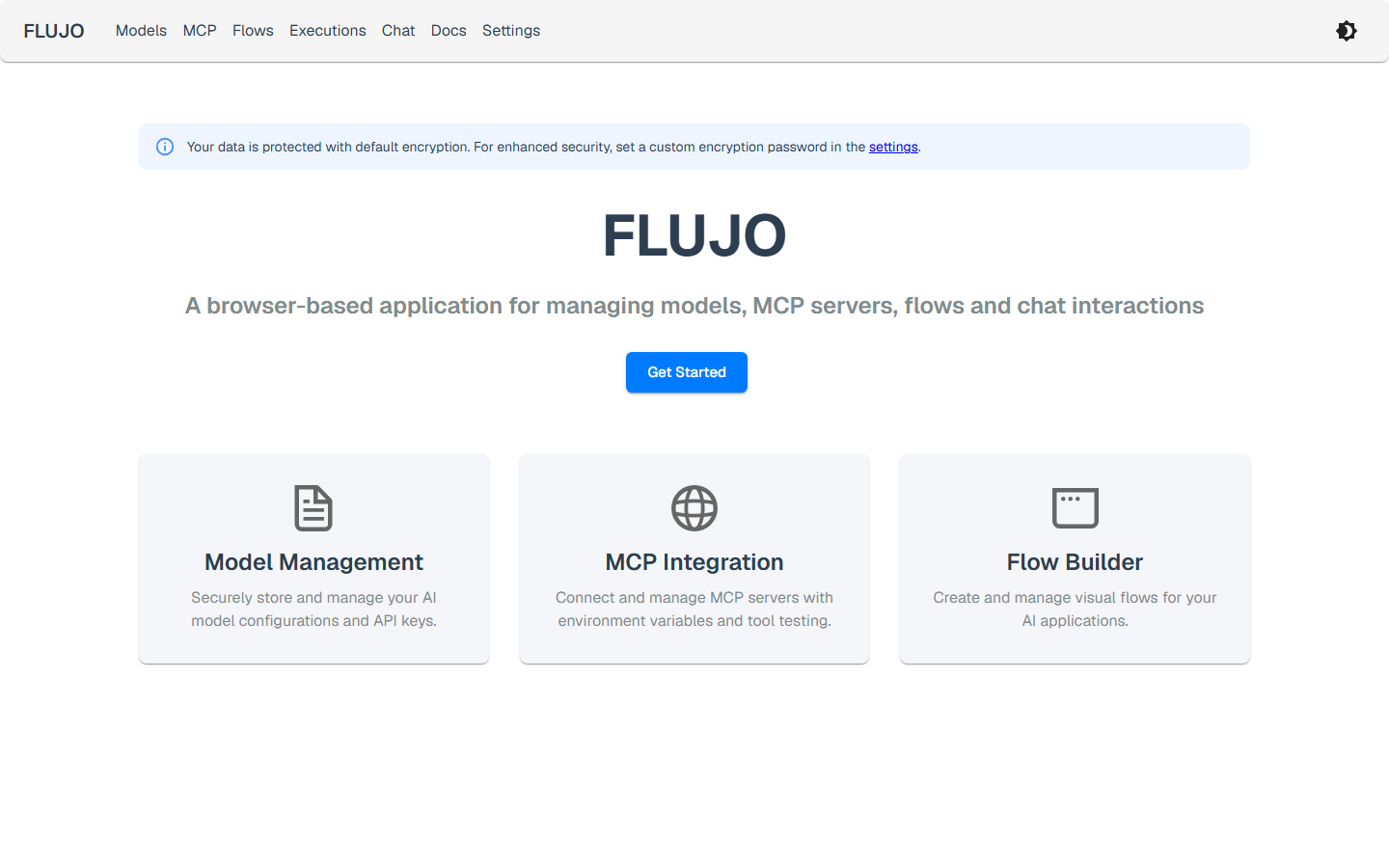
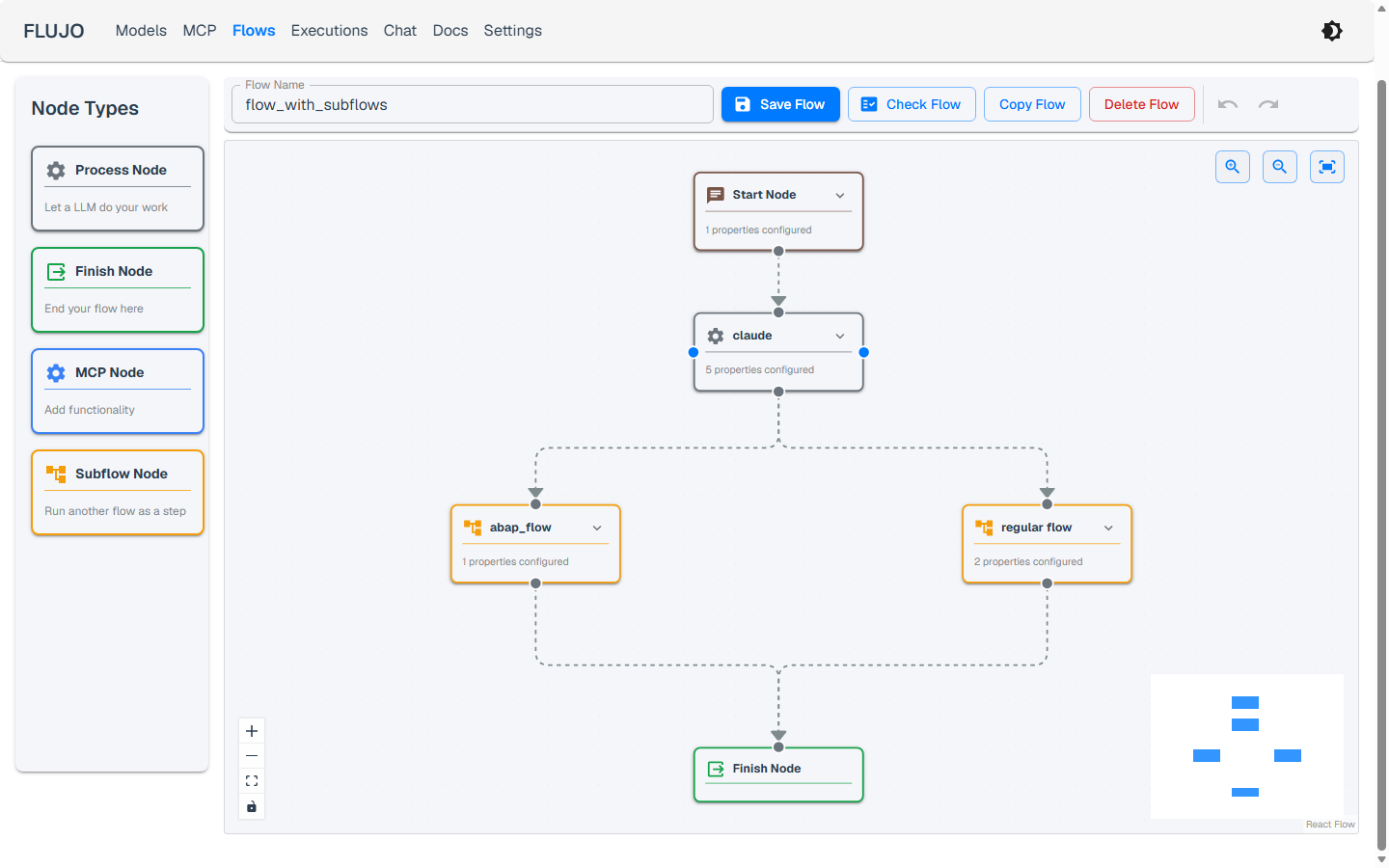
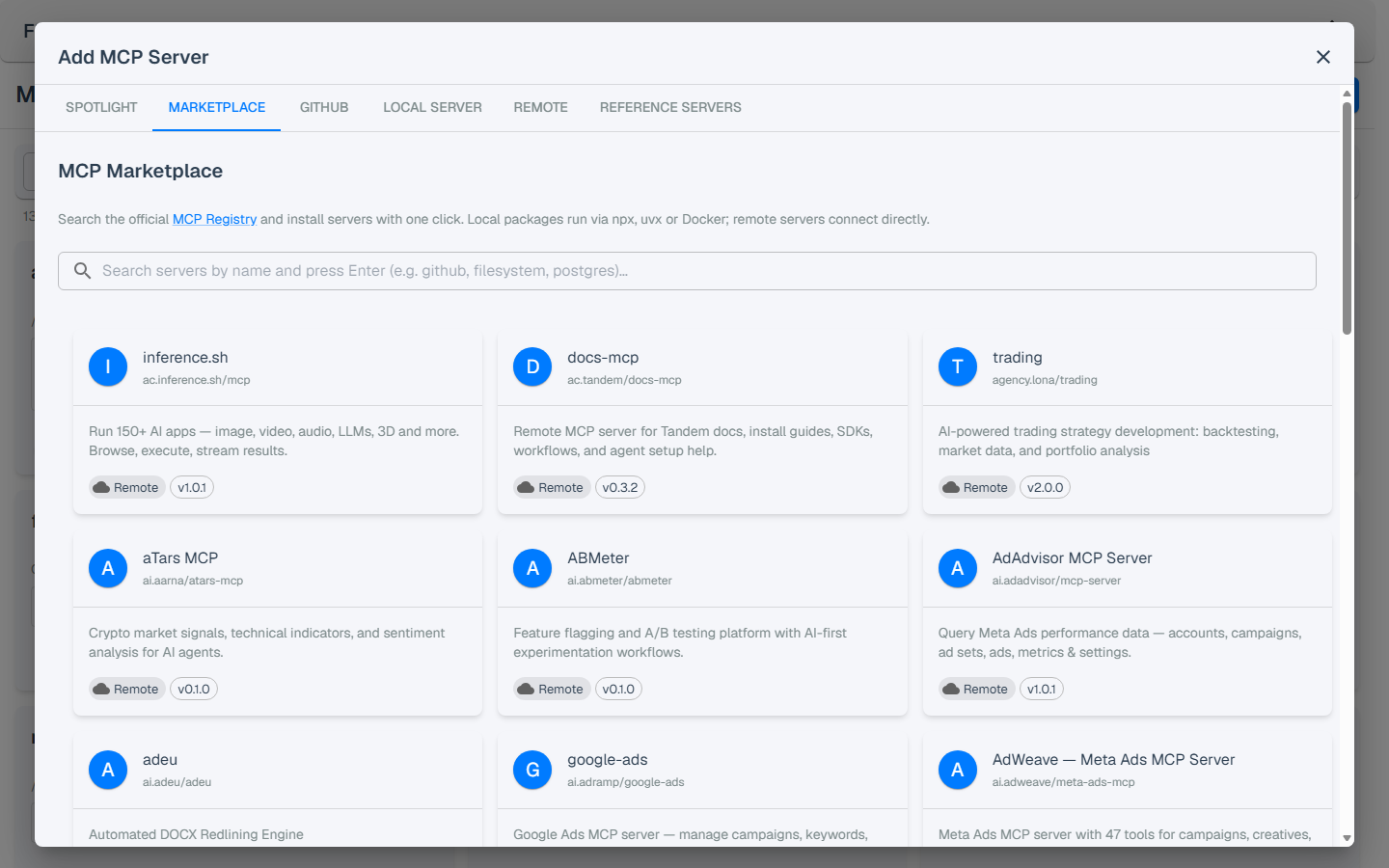
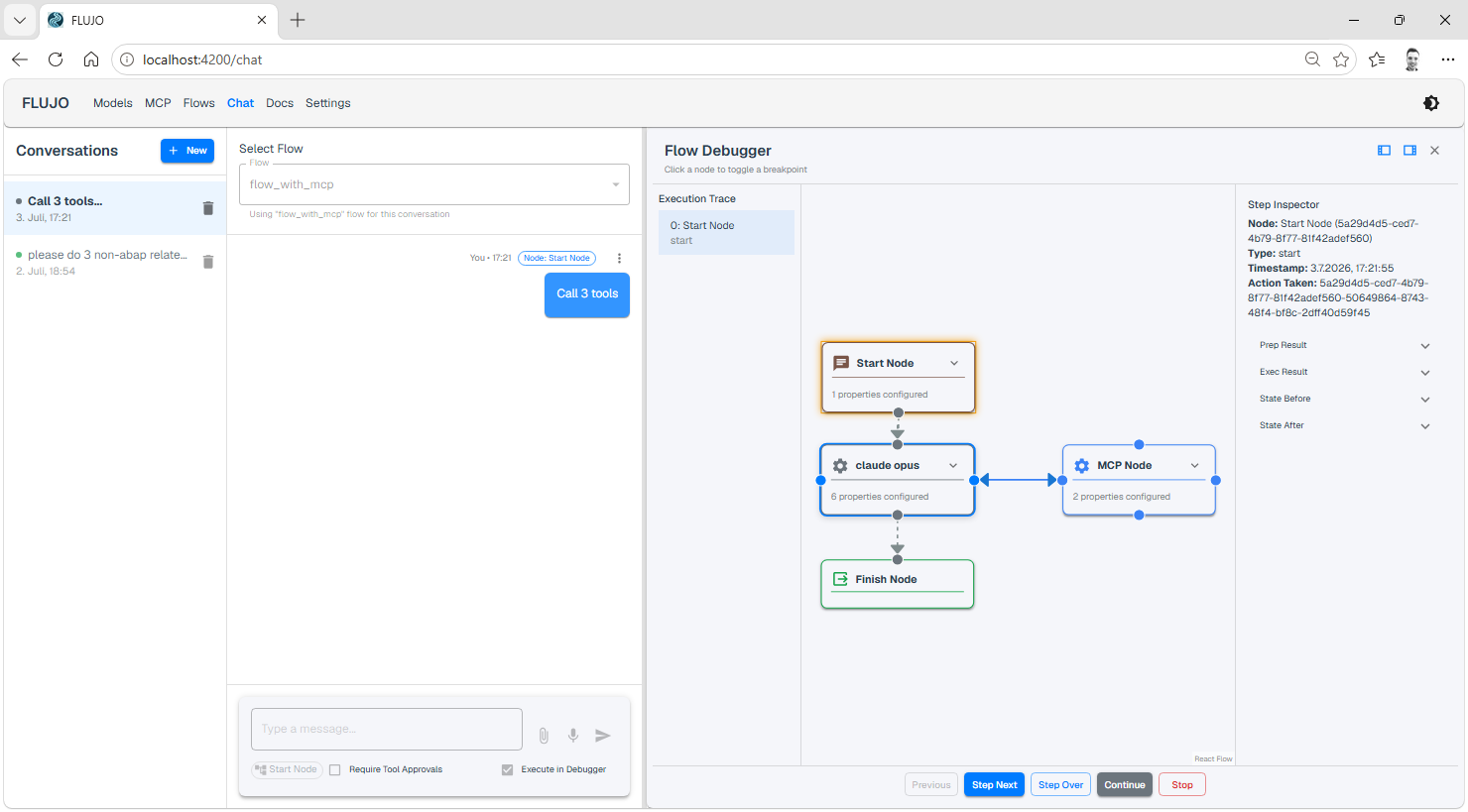
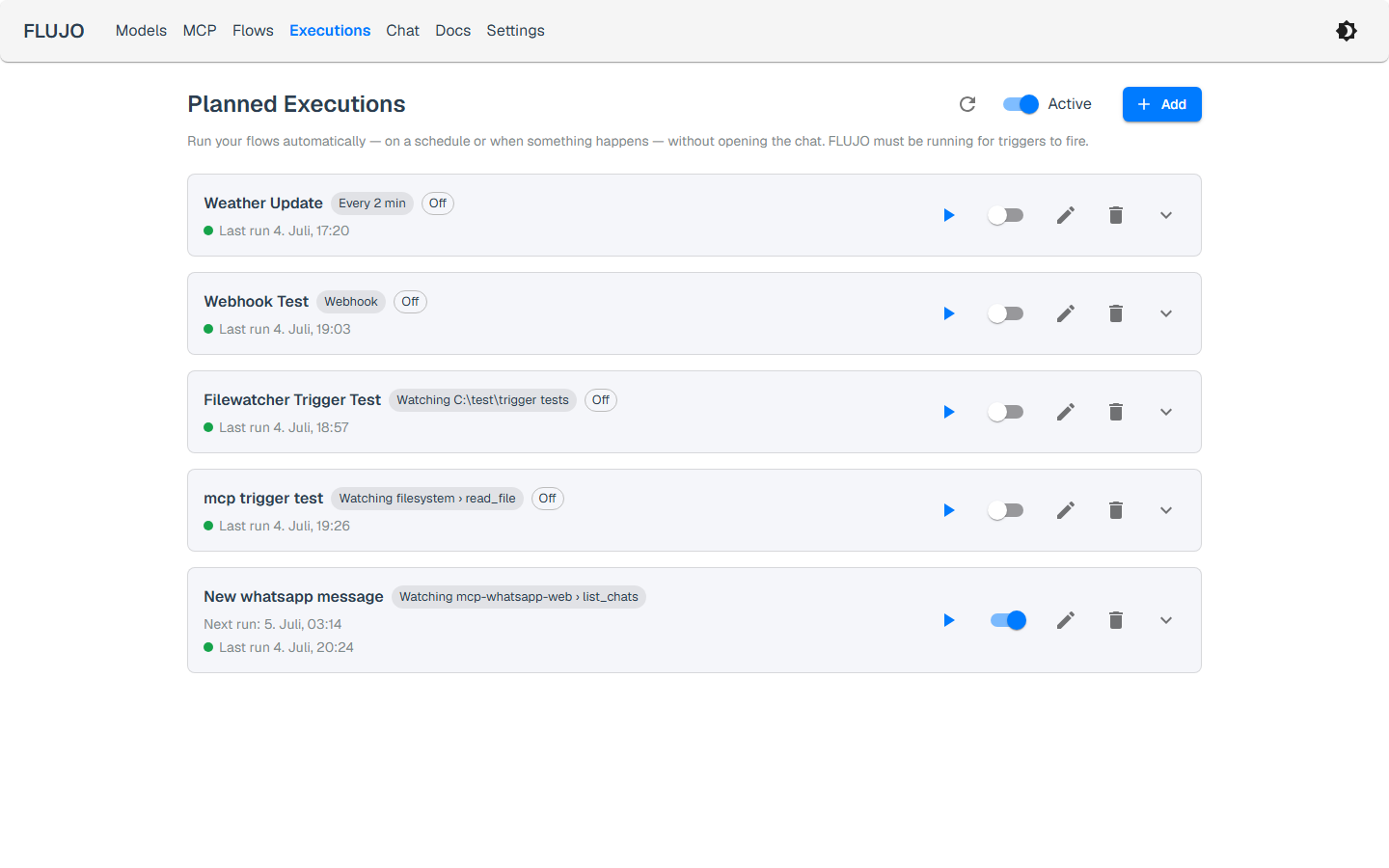
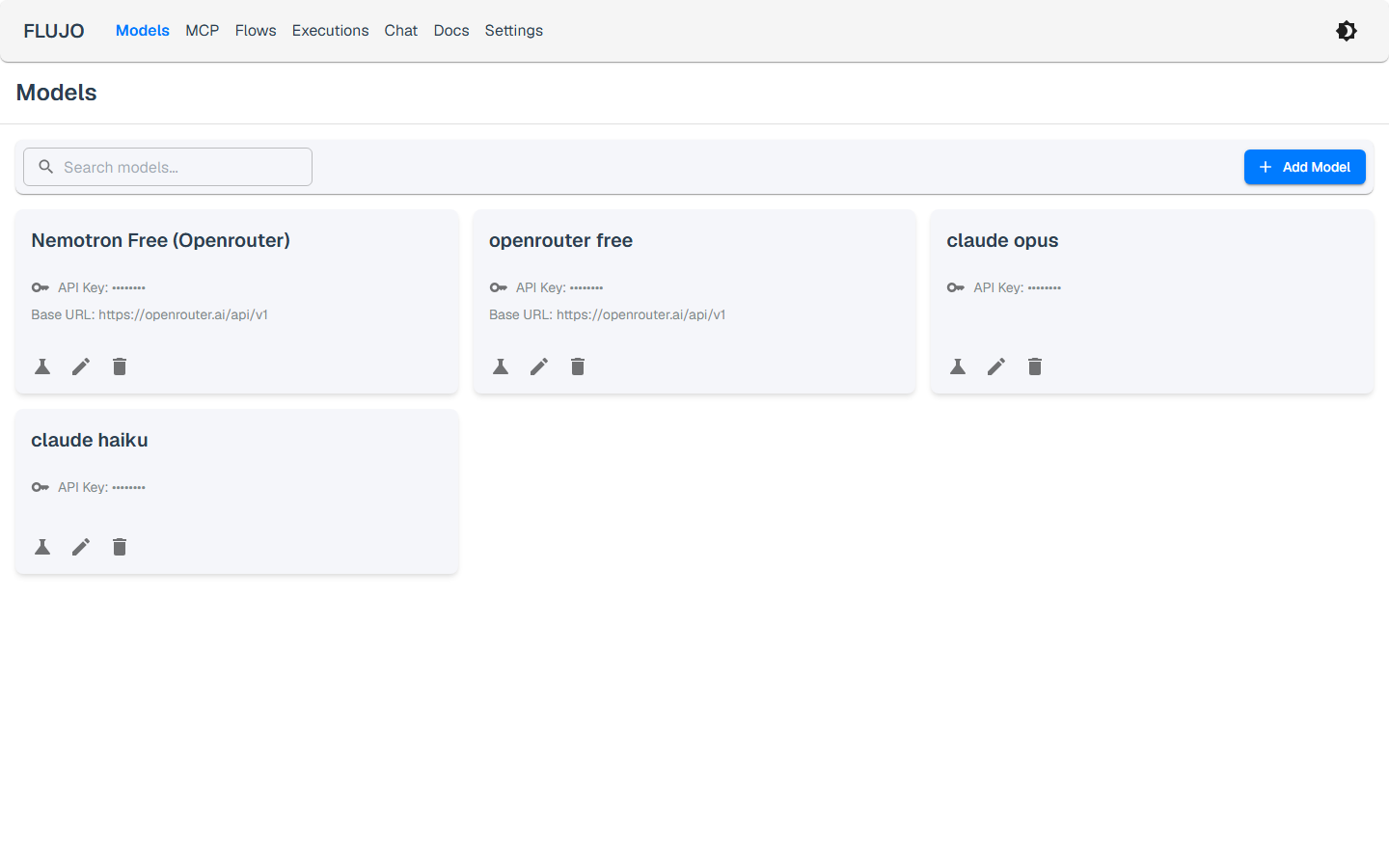
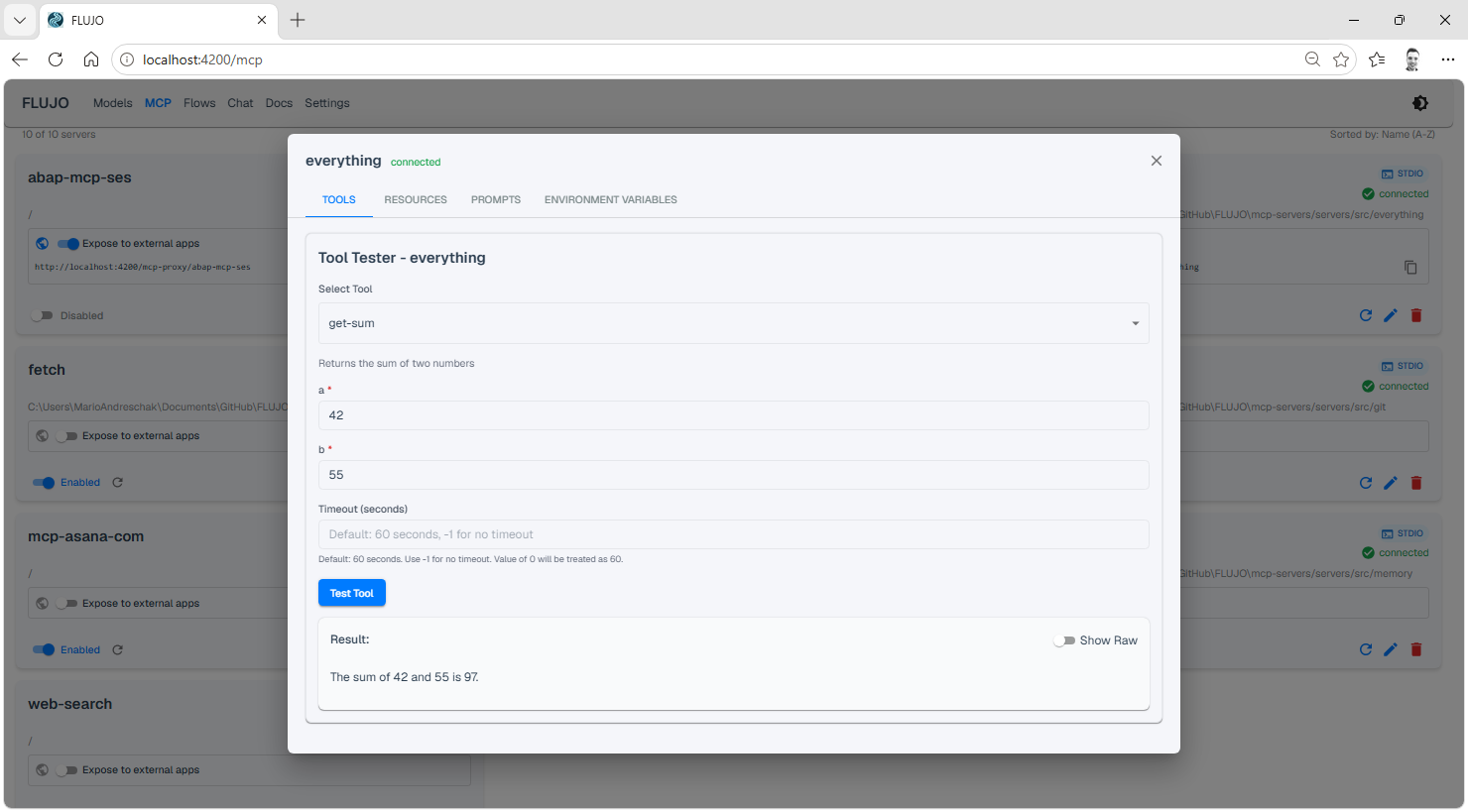
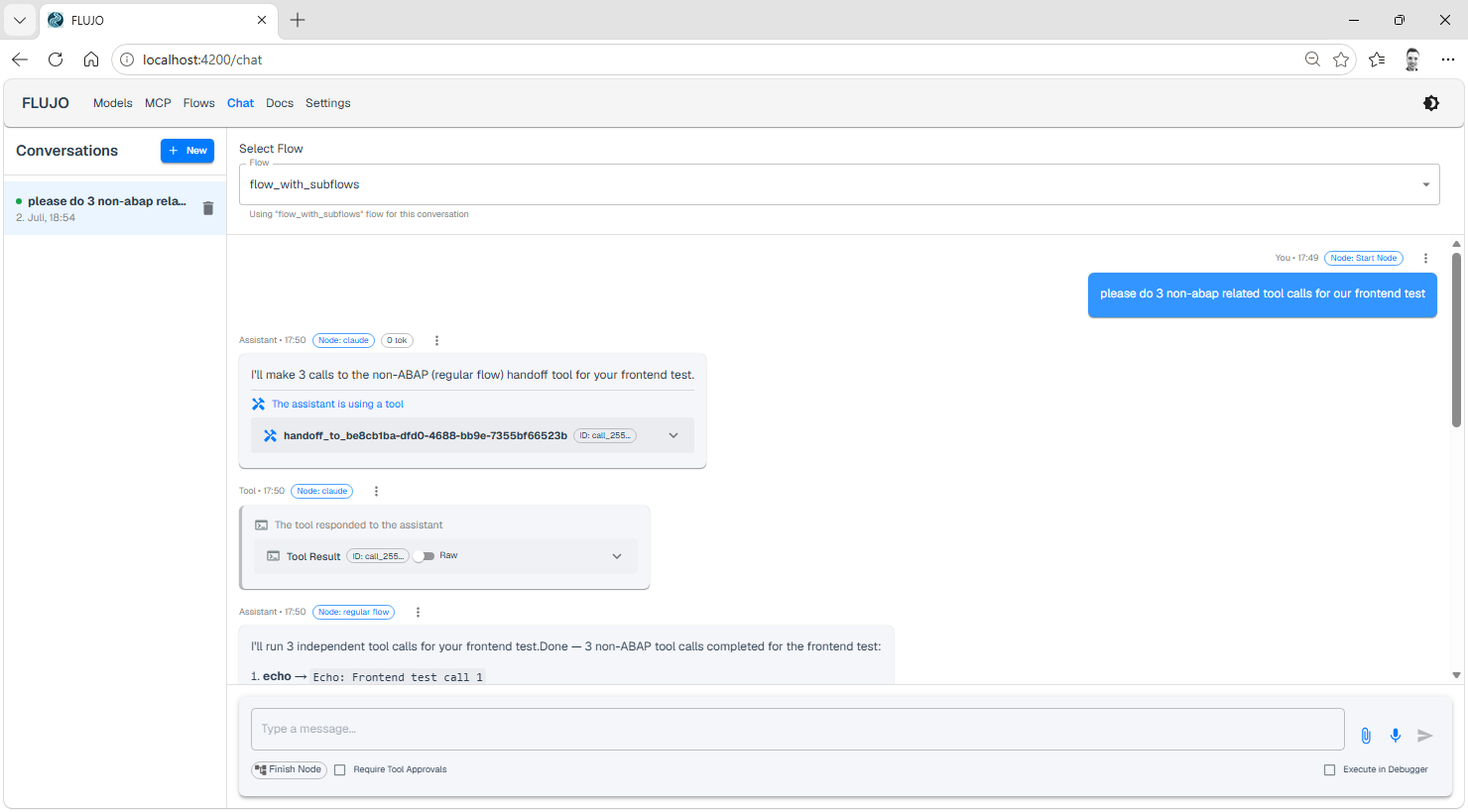
An open-source, local-first platform for building MCP-powered AI workflows — model management, MCP servers, a visual flow builder, chat, and headless automation in one app. Workspace data is stored locally. Cloud AI and connected apps receive the requests you choose to send. Anonymous usage telemetry is optional in Settings.
irm https://raw.githubusercontent.com/mario-andreschak/FLUJO/main/scripts/install.ps1 | iex
Press Start, type powershell, press Enter, then paste the command. Installs to %LOCALAPPDATA%\FLUJO by default; an uninstaller is included.
curl -fsSL https://raw.githubusercontent.com/mario-andreschak/FLUJO/main/scripts/install.sh | bash
Installs prerequisites via your package manager (Homebrew on macOS), clones and builds FLUJO into ~/FLUJO, and registers the flujo command.
npx flujo-ai
Fastest start if you already have Node.js — runs a prebuilt FLUJO with no clone or build. Data lives in ~/.flujo; some MCP servers may still need git / python / uv on your PATH.
git clone https://github.com/mario-andreschak/FLUJO.git && cd FLUJO && docker compose up --build
Your flows, keys, and MCP servers persist in named volumes across restarts. The port is bound to localhost only — FLUJO has no auth layer, so don't publish it without a reverse proxy. To update later, git pull then re-run the same command — --build rebuilds the image with the new code (plain docker compose up would reuse the cached image and silently run the old version).
The Windows / Linux / macOS installers also set up everything FLUJO needs — Git, Node.js, Python & uv. Then open
http://localhost:4200.
Click a node to explore what FLUJO brings together.
Click anywhere outside a node to resume the orbit.
From API-key vault to headless automation — the full path from idea to running agent.
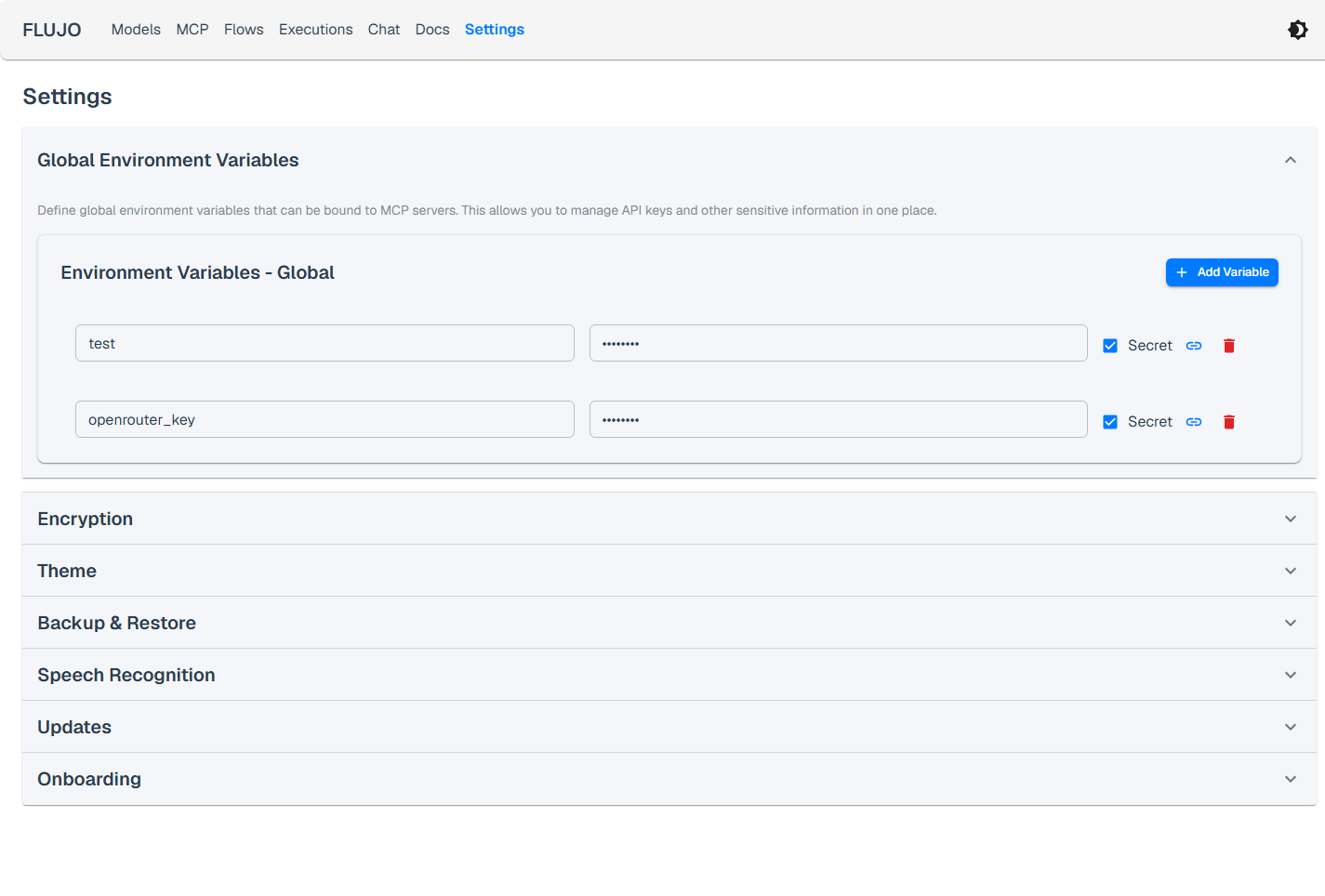
API keys are encrypted at rest and never sent to the browser — bind a key once as a global variable and reuse it in any model or MCP server config.
OpenAI, Anthropic, Google Gemini, X.ai, OpenRouter, and local Ollama — plus using your Claude Pro/Max subscription directly instead of a metered API key.
Search the official MCP Registry and install servers with one click, pick from the curated Spotlight, or install from GitHub / a local folder. Inspect and test every tool in-app.
Drag-and-drop orchestration with branching, handoffs, loops, and subflows — reuse a whole flow like a function, with per-node tool and prompt scoping.
Watch runs progress node-by-node with token usage, set breakpoints and step through executions, and require human approval before any tool call.
Run flows headlessly on cron schedules, webhooks, file changes, MCP tool polling, or URL watches — with full run history per trigger.
Point Cline, Roo Code, Cursor, or any OpenAI-SDK client at FLUJO and call your flows as models — use FLUJO as the backend for your other AI tools.
Configure an MCP server once in FLUJO, then re-expose it to Claude Desktop, Cursor, Cline, and any other MCP client over Streamable HTTP.
A searchable, curated in-app HTTP reference for chat, flows, models, MCP, automations, and administration, with a source-derived route inventory in the repository.
Click any screenshot to enlarge.
FLUJO speaks the protocols your other tools already use.
Point Cline, Roo Code, Cursor, or any OpenAI-SDK client at FLUJO and select your flow as the model — any API key value works.
Base URL:  http://localhost:4200/v1
Model: flow-<your-flow-name>Set a server up once in FLUJO — env vars, auth, build — then use it from Claude Desktop, Cursor, or Cline via the proxy endpoint.
http://localhost:4200/mcp-proxy/<server-name>